We say what we do, and do what we say. We share our thoughts on trends of the market and how our partners are able to utilize the 313 Framework to drive growth of their family wealth and lifestyle.
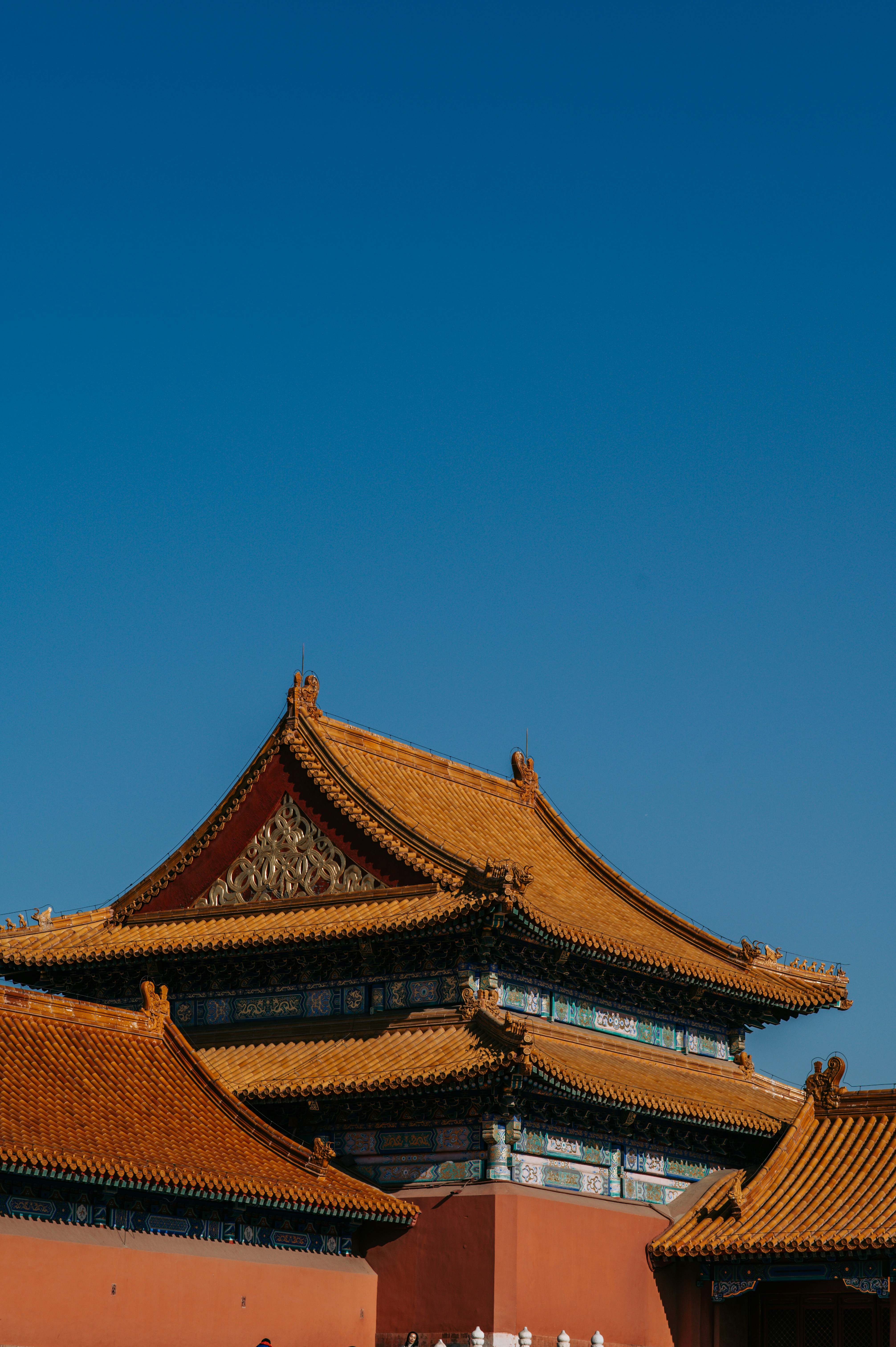
stewards managed the private wealth of kings and nobles, or to legendary dynasties like the Medicis. But wealth preservation is a universal language. If you look across the globe, you will find that ancient Chinese emperors and prominent clans were operating their own highly sophisticated "Family Offices" at the exact same time. While the terminology we use today is modern, the core functions of a Family Office—asset isolation, family governance, and trusts/philanthropy—were deeply embedded in both European and Chinese imperial history. Let's look at how this played out in ancient China: 🏛️ 1. Asset Isolation: The Imperial "Single Family Office" A common pitfall in wealth management is mixing corporate (or state) and personal assets. Both European and Chinese royalties knew how to separate them. In the Qing Dynasty, state finances were strictly managed by the Ministry of Revenue, while the Emperor's private wealth was handled by the Imperial Household Department (Neiwufu). This department managed royal estates and the living expenses of the imperial bloodline—essentially operating as a massive Single Family Office to isolate "state risk" from "family wealth." 📜 2. Family Trusts & Philanthropy: An 800-Year-Old "Charitable Estate" Long before modern trust laws were drafted, prominent Northern Song dynasty minister Fan Zhongyan (in the 11th century) used his life savings to establish the "Fan Clan’s Charitable Estate." He purchased over a thousand acres of prime farmland to serve as "trust assets." The rental yields sustainably funded the clan’s education, living expenses, and social safety net for nearly 800 years. It was a perfect early blueprint for family trusts and sustainable philanthropy. ⚖️ 3. Family Governance: The Ancient "Family Constitution" A successful Family Office manages human capital as much as financial capital. Similar to how European nobles had strict codes of conduct, Chinese clans relied on codified "Family Instructions" (such as the famous Family Instructions of Master Yan). These governance documents set strict behavioral codes and established core values, ensuring that cultural wealth was transferred alongside material wealth. The Family Office isn't just a product of modern Wall Street, nor is it an exclusive heritage of European royalty. It is the result of a parallel evolution in human history. Whether in European castles or the Forbidden City, the pursuit of enduring, multi-generational prosperity is timeless. The legal tools we use today are new, but the wisdom behind them has been tested by emperors and kings for centuries.
Read article
financial future. While both deal with wealth management, their underlying logic, positioning, and scope of services are fundamentally different. To put it simply, the core difference comes down to this: Are you the VIP of the institution, or are you the boss of the institution? To break it down, here are the 3 core differences: 1️⃣ Alignment of Interest Private Banks: Essentially the "sell-side." While Relationship Managers provide professional advice, they often carry sales KPIs. When recommending products, there can be a natural inclination toward in-house or partnered financial products, creating potential conflicts of interest. Family Offices: Strictly the "buy-side." A Family Office's interests are 100% aligned with the family's. They don't sell products; instead, acting as the family's dedicated Chief Investment Officer, they objectively source, compare, and select the best asset allocation strategies across the broader market (including from multiple private banks). 2️⃣ Scope of Services Private Banks: Primarily focused on the growth and preservation of financial assets, as well as financing and credit services. Family Offices: Investment is just the tip of the iceberg. A Family Office acts as a comprehensive "family steward." Services span multi-generational wealth transfer, complex tax and legal structuring, philanthropic foundations, and even next-gen education planning and premium healthcare arrangements. 3️⃣ Barrier to Entry & Operating Costs Private Banks: The account opening threshold typically ranges from $2M to $5M USD. It’s ideal for clients newly entering the HNWI bracket, with fees usually charged based on AUM or transactions. Family Offices: Setting up a Single Family Office (SFO) involves high fixed costs to maintain a dedicated professional team. Generally, a family needs an AUM of at least $100M USD for an SFO to make economic sense. (Though Multi-Family Offices / MFOs have significantly lowered this threshold today). 💡 The Verdict: Not Mutually Exclusive, But Complementary Ultra-high-net-worth families rarely choose just one. The most common blueprint? Using the Family Office as the "brain" for overarching strategy, while partnering with multiple Private Banks as the "platforms" for execution and financing. As the first generation of Asian entrepreneurs enters a massive wealth transfer phase, what is your take? Will Private Banks continue to dominate, or are we about to see explosive growth in the Family Office space in Asia?
Read article
terminals, and complex digital trust structures. It’s natural to view them as a byproduct of highly developed modern finance. But if we unroll the scroll of history, the true ancestors of the Family Office actually date back over a millennium. 🏛️ As early as the 6th century in Europe, royalty and top-tier aristocrats began appointing the "Major Domo" (Chief Steward or Mayor of the Palace). They were not mere servants; they were the original C-suite executives. In an era without modern financial systems, the Major Domo comprehensively managed estate production, manor operations, tax distributions, and even aristocratic marriages and diplomatic alliances. They were the ultimate guardians of family interests. During the Renaissance, this concept reached its historical zenith. Look at the Medici family in Italy or the Fugger family in Germany. If you study their operational models, you'll find they were backed by highly professional, massive advisory teams. This was, in fact, the most primitive—and hardcore—version of a Single Family Office (SFO). What exactly did this Renaissance SFO team do? ✔️ Cross-border Finance & Risk Control: Building pan-European bill of exchange systems and intelligence networks long before the internet. ✔️ Intangible Assets & Reputation Management: Funding artists like Michelangelo and Da Vinci. Through massive art collections and architectural patronage, they maximized their family's social capital. ✔️ Family Education & Succession: Hiring top scholars to tailor-make educational systems for the next generation, ensuring the family's political and business acumen was passed down. This 1,400-year historical trajectory offers a profound lesson for the modern wealth management industry: 💡 A Family Office’s core DNA is never just about ROI. While we've traded castle vaults for quantitative models, the ultimate mission of a top-tier family office remains identical to the classical Major Domo. They must master three roles: 1️⃣ The Stabilizer (Governance): Establishing frameworks to resolve conflicts and prevent wealth destruction from within. 2️⃣ The Guardian (Holistic Capital): Managing not just financial assets, but the family's human, cultural, and social capital. 3️⃣ The Navigator (Legacy): Building anti-fragile structures to survive economic cycles across centuries. Wealth management manages numbers; a Family Office manages time and people. In today's volatile market, we perhaps need to return to the original intention of the classical Major Domo: safeguarding a family's legacy for a century.
Read article
John D. Rockefeller, the founder of Standard Oil, had just become the first billionaire in human history. But the struggles of the world's richest man were hard for ordinary people to imagine. At the time, Rockefeller received an overwhelming avalanche of mail from across the US every day. These weren't business contracts; they were countless "cries for help" seeking investments, personal loans, and charitable donations. Drowning in these letters and the complexities of his personal finances, Rockefeller faced immense mental stress that even began to impact his health. He once sighed in frustration: "Wealth is a gift from God, but I have become a slave to my wealth." To rescue himself from this "wealth disaster," Rockefeller made a highly forward-thinking decision for his era: he completely isolated his personal wealth from his corporate assets. He hired Frederick T. Gates, a shrewd clergyman and businessman, and set up an exclusive office in New York (which later became the famous "Room 5600" at Rockefeller Center). This team consisted of top-tier lawyers, accountants, investment experts, and archivists. They didn't work for Standard Oil—they worked exclusively for the Rockefeller family. This team didn't just manage his massive asset allocation; they also established a scientifically rigorous "charitable review mechanism" to stop the blind distribution of funds. This was not only the prototype of the modern philanthropic foundation, but it also marked the official birth of the first true Single Family Office (SFO) in human history! 🏛️ From this piece of history over 140 years ago, modern entrepreneurs and wealth managers can draw three key insights: 1. Establish Clear Boundaries: There must be an absolute firewall between corporate assets and personal/family wealth. The most common mistake first-generation founders make is mixing the company treasury with the family wallet. 2. Systems Over Intuition: When wealth accumulates to a certain level, whether for investment or philanthropy, it requires standardized due diligence (DD) and screening mechanisms, rather than relying solely on personal connections, pity, or gut feelings. 3. Buy Back Mental Freedom: Wealth creation (entrepreneurship) and wealth preservation (investment/succession) are two entirely different skill sets. Leave professional matters to professional teams. The greatest value of a Family Office is actually "buying back the founder's time and focus." Today, Family Offices have become standard practice for ultra-high-net-worth individuals worldwide, but the core essence remains exactly the same: using professional systems to ensure family wealth and values can transcend generations.
Read article
However, the legal war surrounding Hong Kong’s Great Eagle Group —where a 90+ year-old matriarch sued her trustee to dismantle her late husband's trust—serves as Asia's most dramatic cautionary tale: A trust structure without aligned family governance is just a deferred crisis. 📜 The Backstory Founded by Lo Ying-shek and his wife Lo To Lee-king, Great Eagle grew into a premier property behemoth (owning Langham Hotels and Champion REIT). In 1984, Mr. Lo established a discretionary family trust managed by HSBC International Trustee to hold a commanding stake in the empire. The Catalyst After the founder passed away in 2006, deep internal rifts emerged among the children, splitting the family into two factions: Management Faction: Led by chairman Dr. Lo Ka-shui, who steered expansion and built up his personal equity stake. Challenger Faction: Supported by the matriarch, who felt Dr. Lo was eroding balance among siblings and dominating the empire. In 2016, the matriarch sued HSBC Trustee to remove them and dismiss her son—initiating years of costly, public litigation. Key Takeaways for Wealth Planners Discretionary Trusts are Not "Blank Checks" The court ruled against the matriarch, affirming that trustees must act according to fiduciary duty and trust terms—not at the later whim of settlors or beneficiaries. Control, once given up, is truly gone. Equity Creep vs. Trust Control Dr. Lo consolidated power by accumulating personal market shares outside the trust. Family charters must explicitly regulate whether members can buy competing shares in listed family vehicles. Governance Beyond Legal Structures Structures protect assets; governance protects relationships. Without family assemblies, communication protocols, and conflict-resolution mechanisms, legal defenses will breach under human friction. Final Thought Wealth can build skyscrapers, but without proactive family alignment, those skyscrapers become walls dividing bloodlines. The human structure must be built just as meticulously as the financial one.
Read article
" Yet, looking at the history of Hong Kong’s leading Family Offices, we see a different narrative unfold: true legacy building has never been about simply accumulating assets—it is about governance design, strategic asset transformation, and value alignment. One of the most masterclass examples remains the late media mogul Sir Run Run Shaw. When facing the reality that his children had no interest in inheriting his sprawling media empire, Sir Run Run didn’t force a legacy on them. Instead, through a well-structured Family Office and Trust framework, he executed a forward-looking transition: 1️⃣ De-risking & Asset Transformation: He systematically de-risked by liquidating operating assets (such as TVB shares) into a diversified, low-risk global investment portfolio. 2️⃣ Separation of Interests: He clearly delineated between family protection and social legacy—ensuring his heirs were well taken care of while protecting core capital from equity fragmentation or disputes. 3️⃣ Impact & Enterprise Sustainability: He established the Shaw Foundation and created the Shaw Prize (often dubbed the "Nobel of the East"), translating corporate capital into enduring global influence in science and education. Today, Hong Kong’s Family Office ecosystem is undergoing a profound paradigm shift. The new generation of family principals and tech founders are moving beyond traditional real estate and public equities. They are channeling capital into deep tech (AI, Biotech), ESG, Web3, and Impact Investing. At its core, a Family Office is never just a "wealth keeper." It provides: Protection: Insulating assets from operational and familial risks via trusts and robust structures. Evolution: Leveraging modern capital to drive innovation for legacy businesses. Continuity: Unifying generations around shared values and clear governance (Family Charters). Wealth creation requires commercial vision, but wealth continuity demands governance. 💡 Key Takeaways: Legacy ≠ Business Succession: If heirs choose a different path, restructuring operating business assets into a liquid trust portfolio protects both the family and the business. Architecture Over Emotion: A robust Family Office structure separates family welfare from corporate governance, eliminating intergenerational disputes. The Modern Shift: Family Offices are evolving from passive "wealth keepers" to active drivers of Deep Tech, ESG, and Impact Investing. In your view, what is the biggest challenge in modern family wealth management—achieving target returns or managing intergenerational governance?
Read article
Over the next two decades, roughly $84+ trillion will shift from Baby Boomers to Gen X and Millennials. This isn't just a financial event. It's a human story playing out inside millions of households. Right at the centre sit family offices — no longer just tools for tax structuring or asset allocation, but a vital bridge between generations. A Story of Two Generations In a recent family board meeting, a classic conflict unfolded: Patriarch (Gen 1): Built a multimillion-dollar empire in manufacturing and real estate over 40 years on grit and intuition. His mindset: "Wealth means land, bricks, and tangible cash flow." Successor (Gen 2): Forward-thinking and stepping up to lead the family office's investment committee. Her mindset: "Without AI, clean tech, and impact investing, our influence will be obsolete within a decade." The result? A months-long deadlock. The father felt disrespected; the daughter felt dismissed. Sound familiar? 70% of wealthy families lose their wealth by the 2nd generation, and 90% by the 3rd. The root cause is rarely bad stock picks — it's a breakdown in communication, governance, and shared purpose. Evolution of the Modern Family Office Leading family offices are shifting from pure wealth preservation to holistic governance, aligning generations around a goal that balances core wealth with growth: ⁃ Draft a Family Charter: Establish clear rules for succession, conflict resolution, and employment criteria. ⁃ Create Next-Gen Sandbox Funds: Give next generation autonomy to invest in pioneering sectors within controlled risk parameters. ⁃ Redefine Legacy: Shift the narrative from "passing down money" to "stewardship and shared values." The Outcome In our story, the family office advisor facilitated a compromise: ⁃ 80% of the core portfolio stayed in stable, traditional yield assets. ⁃ 20% went to a new Sustainability & Tech Fund, managed by the daughter with strict reporting on both ROI and societal impact. The father protected his legacy. The daughter found her voice. Key Takeaways ⁃ The Great Wealth Transfer will have significant global downstream impacts for decades — families must be prepared. ⁃ The best family offices don't just build resilient portfolios; they ensure the family agrees on how to govern. ⁃ Build a shared vocabulary across generations to drive clarity on strategy and execution. 💡 For those advising families or managing cross-generational wealth: what's been the biggest hurdle to alignment — investment philosophy or communication?
Read article
its length." While practitioners plan for market volatility and tax shifts, they often overlook the most volatile factor: Key-Man Risk and the psychological impact of black swan events. To understand how a family office acts as the ultimate defense mechanism, we must look at Hong Kong’s most dramatic corporate succession battle: The Sun Hung Kai Properties (SHKP) Kwok Family Storm. ⚡ The Catalyst: A "Key-Man" Crisis In 1997, the eldest brother and then-Chairman of SHKP, Walter Kwok, was kidnapped by the notorious gangster Cheung Tze-keung. Though released after a HK$600 million ransom, the severe trauma left Walter with Post-Traumatic Stress Disorder (PTSD), fracturing his trust in his family. The Breach: Seeking external support, Walter grew heavily reliant on a female confidante and attempted to bring her into the core decision-making circle of the family office. The Escalation: This directly breached the family trust’s most sacred boundary—"preventing hostile external influence." His siblings revolted, triggering a bitter 20-year legal and public battle. 🛠️ The Family Office Defense Mechanisms Despite a decades-long feud that would have destroyed most conglomerates, SHKP survived and thrived. Why? Because of three essential structural pillars: 1️⃣ Strict Separation of Ownership and Control A robust Irrevocable Family Trust separated Legal Ownership (held by the Trustee) from Beneficial Interest (held by family members). Even at the height of the feud, no sibling could unilaterally liquidate or dilute SHKP’s core shares. 2️⃣ The Power of a Family Constitution In 2002, the family matriarch led the signing of a strict Family Constitution that explicitly barred external parties from holding executive power. Codifying conflict-of-interest policies before a crisis arises neutralizes emotional bias in corporate governance. 3️⃣ Emergency Succession Planning (ESP) Modern family offices must prepare for cognitive, physical, or psychological incapacity of a key leader. An objective, pre-defined board mechanism must be ready to trigger immediately to keep strategic assets from being held hostage by personal struggles. 📌 Key Takeaways for Wealth Practitioners 🛡️ Trust Structures Must Be Human-Proof: Design trusts to withstand not just market crashes, but also psychological crises and sudden emotional shifts of beneficiaries. 📜 Code Over Emotion: Do not wait for a crisis to define boundaries. Establish clear protocols on "Who has a seat at the table?" while relationships are still harmonious. 🚨 Plan for the Unthinkable: Every robust wealth plan must include a defined Emergency Succession Plan to immediately pivot and protect the enterprise when a key leader is compromised.
Read article
masterpiece. It demonstrates how a family can leverage institutional structures to transform traditional real estate wealth into a powerhouse of global technology and biotechnology venture capital. The Patriarch’s Shocking Decision In the 1960s, Chan Tseng-hsi founded Hang Lung, becoming one of Hong Kong's first-generation real estate titans. However, upon his passing in 1986, he made a decision that shocked the community: he did not leave his massive fortune directly to his sons. Instead, he placed his entire estate into a family trust managed by professional custodians alongside his wife. This sent a clear message to his sons, Ronnie and Gerald: they had to prove their own capabilities. Morningside: Separating Businesses, Not the Family In 1986, the brothers established the Morningside Group, the blueprint for their family office. They executed a flawless division of labor: Ronnie Chan (The Elder Son): Took the helm of the core real estate business, boldly expanding Hang Lung into mainland China with the iconic "Plaza 66" luxury developments. Gerald Chan (The Younger Son): A Harvard-trained scientist, he used the family office to bypass real estate entirely, diving headfirst into venture capital (VC) for tech and life sciences. The Masterstroke: Xiaomi In 2010, Morningside became the first institutional investor to back Lei Jun’s startup, Xiaomi. When Xiaomi went public in Hong Kong in 2018, Morningside held a 17.19% stake. That initial investment grew thousands of times over, injecting astronomical "New Money" into the family office. Ultimate Legacy and Philanthropy Guided by their mother’s values, the family used their wealth to elevate humanity. In 2014, they made a historic US$350 million donation to Harvard University—the largest in its history—renaming the school the Harvard T.H. Chan School of Public Health in honor of their father. In 2024, Ronnie Chan seamlessly passed the chairmanship to his son, Adriel Chan, completing another flawless succession. The Chan family proved that a true family office is a bridge that transforms old brick-and-mortar wealth into the fuel that empowers the next generation to reshape the world. Key Takeaways Legal Trust Over Direct Inheritance: A structure that encourages next-gen capability and protects core assets. Asset Evolution: Understand how to transform traditional assets (like real estate) into resilient assets (like tech venture capital). Purposeful Legacy: Drive impact and influence by aligning global philanthropy with multi-generational family values.
Read article
Because many patriarchs mistake a family office for just an oversized brokerage account. True family offices don't just manage wealth; they govern people. The Three-Strike Rule A masterclass in this is Shau Kee Financial Enterprises, the mega single-family office of Hong Kong tycoon Lee Shau-kee (Henderson Land). Managing over $12B+ AUM, its real genius lay in a "Three-Strike Tolerance Mechanism": 1) The Strategic Safety Margin: The family constitution allocated a fixed capital percentage for the next-gen to spearhead tech investments, explicitly permitting up to three strategic failures. 2) Institutionalizing Mistakes: After any misstep, successors and analysts conducted a rigorous post-mortem to convert losses into risk-management assets. Multimillion-Dollar Lessons Heirs Peter and Martin Lee both tested these boundaries: • Martin pushed into dot-com ventures right before the 2000s crash, and his early overhaul of the Miramar Hotel dragged returns way below baseline. • Peter went heavy on mainland tech IPOs, facing massive paper losses during regulatory market corrections. In traditional Asian corporate culture, such losses mean losing your seat. Instead, the family office flipped the script. The patriarch and CIO used these failures to teach macro-policy risks. The tuition was expensive, but it built institutional memory. Martin later stabilized Miramar into a lucrative lifestyle empire, while Peter pivoted the group into multi-billion-dollar semiconductor and green energy supply chains. Key Takeaways •Governance Over Returns: A family office's true job is managing succession risk and developing capable stewards. •Controlled Classrooms: The "Three-Strike" rule caps capital so mistakes can happen without threatening the core business. •Fail Early: It is better to make affordable mistakes under a safety net today than a catastrophic blunder tomorrow.
Read article
But ensuring that wealth survives market cycles, economic downturns, and industry disruptions? That requires an entirely different level of strategic foresight. One case study consistently stands out as a textbook masterclass: Sunrise Capital, the single-family office of Haidilao founders Zhang Yong and Shu Ping. Many view family offices simply as vehicles for tax optimization or private investments. However, a closer look at their blueprint reveals a sophisticated network of risk isolation and asset protection: 1️⃣ The "Dual Trust" Firewall Around the time of their IPO, the founders transferred their shares into two separate, irrevocable offshore family trusts. Legally, these assets no longer belong to them as individuals. This structural firewall ensures that no matter what operational headwinds, market volatility, or liabilities the core business faces, the trust assets and family office capital remain completely insulated. 2️⃣ Decoupling Business Cycles from Family Wealth Through Sunrise Capital in Singapore, the family has systematically funneled business dividends into diversified global asset allocations—ranging from prime real estate and tech startups to fixed-income portfolios. The ultimate takeaway here is powerful: "Businesses have cycles, but wealth shouldn't have boundaries." When the pandemic hit the global F&B industry between 2021 and 2022, causing public market valuations to fluctuate, the family’s core wealth remained rock-solid. Why? Because the heavy lifting had already been done years prior through their family office architecture. The Golden Rule for Founders & Wealth Architects: Don't wait for the storm to start looking for an umbrella. The most resilient family offices are established not during a crisis, but during the peak of a company's profitability—when the separation between "corporate money" and "family wealth" can be executed flawlessly. Want to understand more about how a family office can utilize unique structures to protect and grow your wealth? Drop us a note in the comments - we are happy to share more insights with you.
Read article
8 trillion. As global capital scrambles for a piece of this “IPO of the century,” one trend stands out above all: the massive influx of top-tier family offices. Alongside overwhelming retail demand and BlackRock’s anchor commitment, a single family office has reportedly written a massive check of over $1 billion. For ultra-high-net-worth families who typically prioritize long-term wealth preservation, deploying over $1 billion into a single technology enterprise is an exceptionally rare, bold move. Why are these "Old Money" and new-wealth family offices choosing to go all-in on space tech amidst today's macroeconomic uncertainties? This move signals three fundamental paradigm shifts in asset allocation: 1. From "High-Risk Venture" to "Global Monopolistic Infrastructure": Starlink is no longer a concept; it is a global powerhouse generating massive revenue and free cash flow. For family offices, SpaceX has transitioned into the "telecom infrastructure" of the new era—much like the railroads of the 19th century. This is the perfect asset to hedge against inflation and preserve wealth across generations. 2. Betting on the Ultimate AI Closed-Loop (The "X-Universe"): Smart capital looks at the compounding synergy of Elon Musk’s broader ecosystem. SpaceX’s low-Earth orbit (LEO) satellite network will serve as the critical neural network linking xAI, Tesla’s autonomous driving/robotics, Neuralink, and the X platform. 3. Strategic Sovereignty in a Geopolitical Era: From defense communications to intelligence surveillance, SpaceX is now deeply intertwined with sovereign interests. This "defense infrastructure" quality makes it incredibly resilient compared to typical consumer tech stocks. 🔥 The Spillover Effect: Because SpaceX shares are so heavily oversubscribed, many family offices—particularly in Asia—who were boxed out of the direct allocation are aggressively pivoting to the broader space economy value chain, driving rapid capital spillover into commercial space ETFs and LEO satellite supply chains. Closing Thoughts: As a family office, we guide the wealth of our clients with an investment horizon measured in decades. The fact that many family offices are vying to allocate capital towards space tech marks a monumental turning point: The space economy has finally graduated into a core alternative asset class of long-term growth for institutional capital. To our peers in asset management and investment advisory: How do you view SpaceX’s current valuation? Is space tech making its way into your strategic asset allocation blueprints?
Read article
Many look at Macau casino tycoon Stanley Ho’s family and see only tabloid drama. However, through the lens of a Family Office, his late-stage decisions represent a masterclass in cross-generational corporate governance. Facing a massive family structure of 4 wives and 17 children, the "King of Gambling" replaced paternal emotion with bulletproof institutional design, safeguarding his empire through three executive strategies: 1. Absolute Separation of Powers (Management vs. Economic Rights) Splitting equity equally among all children is usually the catalyst for corporate collapse. Ho’s advisors executed a highly rational separation: The Operators: Core listed flagships (Shun Tak, SJM, Melco) were handed exclusively to the proven which is Pansy Ho, Daisy Ho, and Lawrence Ho. The Beneficiaries: The remaining branches were allocated financial returns through discretionary trusts and massive non-core asset portfolios (real estate and overseas investments). 📊 The Insight: Put the most competent leaders on the battlefield, while allowing the rest of the ecosystem to share the economic fruits. 2. Trust Defense: "Preserve Ownership, Distribute Yield" Handing liquid billions directly to 17 children exposes capital to immense spendthrift risks. Ho’s inner circle established multiple high-net-worth Family Trusts. Family members receive a fixed monthly stipend rather than direct stock ownership. Capital for venture ideas, education, or medical needs must be vetted and disbursed on a "reimbursement basis" by independent trust committees. 📊 The Insight: By locking the underlying principal in a trust, individual failures or divorces cannot touch the central family treasury. 3. Framework First: Institutionalizing the Legacy When Stanley Ho passed away, legal battles inevitably sparked over estate valuations. Yet, the empire did not flinch, and stock prices remained rock-solid. Why? Because the framework worked. The High Court appointed independent specialists as administrators. All asset mapping followed a rigid legal process—no single faction could siphon assets, and no one was shortchanged. 🎯 The Bottom Line Once wealth reaches a certain threshold, preserving it is vastly more difficult than creating it. Stanley Ho's greatest legacy wasn't physical hotels; it was utilizing a Family Office mindset to use institutional design to manage human risk.
Read article
Yet, over 70% of family enterprises and family offices lack a robust succession plan. Succession is not a binary choice between passing the keys to an heir or selling out. Modern continuity relies on a spectrum of 6 core models and platforms like 313 Family Office help families navigate these pathways smoothly: 1. Sibling Partnership The Setup: Multiple family members come together to jointly lead and own the company. The Benefit: Leverages diverse internal talents and perspectives. The Catch: Demands absolute trust, strong communication, and a hyper-clear division of responsibilities. 2. Non-Family CEO The Setup: Bring in an outside expert to manage day-to-day operations while the family retains ownership and oversight. The Benefit: Ideal when there is no suitable family successor or when fresh institutional expertise is required. 3. Family Board Chairperson The Setup: A family member provides strategic guidance as Chair, while non-family professionals handle operations. The Benefit: The elegant middle ground. It preserves the family’s DNA while injecting institutional-grade management. 4. External Sale or Merger The Setup: Exiting the business completely by selling to a third party or merging with a competitor. The Evolution: Monetizes your legacy to create immediate liquidity. This event often marks the birth of a Family Office, shifting focus from running a business to managing liquid wealth. 5. Employee Stock Ownership Plan (ESOP) The Setup: Giving loyal employees a share of the company. The Benefit: Encourages the team to think and act like owners, securing the corporate culture beyond family ties. 6. The Hybrid Model (The Modern Standard) The Setup: Combining elements of the models above. Example: A family member serves as CEO, non-family professionals fill other C-suite roles, and key employees participate in an ownership plan. Succession planning is not an exit strategy; it is the ultimate act of leadership. Whichever path you choose, separating ownership from daily management early is the key to protecting both family harmony and business longevity.
Read article
However, as we move through 2026, these high walls are crumbling. Driven by the democratization of financial technology and the maturity of collaborative models, the Family Office is rapidly evolving into a standard tool for the "Middle-Affluent" (families with assets ranging from $5M to $25M) to safeguard their hard-earned legacies. Why the Middle-Affluent are Making the Move? Unlike billionaires, middle-affluent families have a low margin for error. Their wealth is often concentrated in a family business or specific real estate. A single tax misstep, a legal dispute, or an unmanaged inheritance conflict can devastate two generations of hard work. And Why the Middle-Affluent Need This "Operating System" Breaking Information Silos: Traditional wealth management for the middle class is fragmented. A banker sells funds, an agent sells insurance, and an accountant handles filings. These professionals rarely communicate, leading to massive structural gaps. A Family Office acts as a "Family CFO," integrating legal, tax, and investment strategies to ensure every dollar serves a unified family goal. Defending Against Tax and Compliance Risks: With the rise of global tax transparency (CRS) and the rapid evolution of regulations regarding digital assets and property taxes, the middle-affluent are the most vulnerable to being caught in a "tax squeeze." Through a Multi-Family Office (MFO), these families can access cross-border tax planning and asset segregation structures previously reserved for the elite, at an affordable cost. Preventing Domestic Friction: Inheritance disputes are a leading cause of family breakdown. A Family Office helps establish a "Family Constitution," institutionalizing education funds and medical reserves. When rules are set in advance, emotional conflicts are replaced by rational systems, preserving both wealth and family harmony. Conclusion In 2026, the question is no longer "Am I rich enough for a Family Office?" but "Can my family afford to navigate this complex world without professional governance?" The Family Office is no longer about building empires; it is about providing the professional "operating system" every successful family deserves to secure their future.
Read article
For many successful entrepreneurs and family businesses, the real challenge is preserving that success across generations. This is why family offices have become increasingly important among Asia’s leading business families. A family office is often misunderstood as simply a private investment platform for the ultra-wealthy. In reality, its role is much broader. It helps families manage wealth, governance, succession, and long-term legacy in a structured and sustainable way. One of the strongest examples in Asia is Hong Kong’s Lee Kum Kee. Founded in 1888, Lee Kum Kee has grown from a small sauce business into a globally recognized brand across multiple generations. Beyond its products, the company’s long-term success reflects the importance of disciplined family governance. Like many family businesses, Lee Kum Kee understood that internal conflict can become a greater threat than market competition itself. As families expand across generations, issues around ownership, leadership, inheritance, and decision-making become increasingly complex. A family office helps solve this by creating clear governance structures. It establishes frameworks for succession planning, ownership, and decision-making, allowing families to rely on systems rather than emotions alone. Another key role of a family office is protecting wealth across generations. Many business families hold most of their wealth within a single operating company, creating concentration risk. A family office helps diversify investments, manage trusts and estate planning, and build long-term financial stability. The goal is not simply to grow wealth aggressively, but to preserve it responsibly for future generations. Succession is also one of the biggest challenges for family businesses. A family office helps prepare the next generation through education, mentorship, and leadership development while also preserving family values and culture. In Lee Kum Kee’s case, the philosophy of “Si Li Ji Ren” (“Considering Others’ Interests”) became more than a business principle — it became part of the family identity. As wealth becomes more global and family structures become more complex, legal, tax, and investment matters also require professional coordination. A family office acts as a central platform that brings together advisors and specialists to manage these responsibilities efficiently. Ultimately, Lee Kum Kee’s story reminds us that lasting success is never built on wealth alone. The families that survive across generations are usually the ones that invest not only in business growth, but also in governance, structure, and long-term thinking. A family office is not simply about managing money. It is about protecting legacy.
Read articleSubscribe to receive our quarterly research publications, monthly notes from the Hong Kong desk, and invitations to closed-door 313 Family Office events. Read by family principals, advisors, and the next generation.